Kim Them Do
Introduction
Vietnam’s education system stands at a critical juncture, navigating systemic quality disparities, exam-driven pressures, and the rapid onset of digital transformation and AI. As recent policy directives – notably Resolution 71-NQ/TW (2025) – signal a shift toward modern governance and holistic human development, fundamental questions emerge regarding the ultimate purpose of education and the model of human being society seeks to cultivate. This paper examines the current state of educational practice in Vietnam and explores how Buddhist ethics, philosophical traditions, and monastic institutional experience can serve as meaningful cultural resources to inform contemporary educational reform.
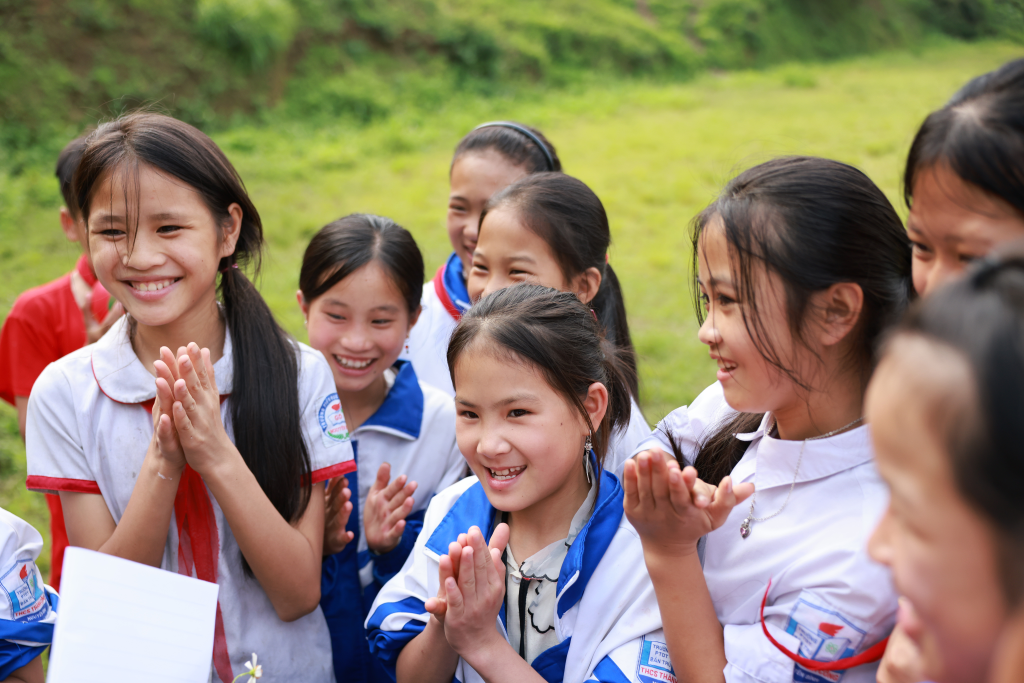
Educational Practice
Overall, Vietnam’s education system currently faces numerous challenges regarding quality, equitable access, academic and examination pressure, resources, school governance, and its capacity to adapt to rapid technological and societal shifts.
These issues have long been identified. They include disparities in educational quality across regions and between urban and rural areas; intense examination pressure driven by an achievement-oriented mindset; shortages and uneven allocation of qualified teachers; limited facilities and resources; and the financial burden of education on many families. Furthermore, digital transformation and the rapid development of artificial intelligence (AI) present new dilemmas, ranging from institutional adaptability to the risk of academic dishonesty. Simultaneously, there is a growing demand for transparency and accountability in textbook selection, admissions, and examinations, alongside an urgent need to foster safe and healthy learning environments.
In this context, it is unnecessary to conclude that Vietnamese education is in full-blown crisis. Rather, the system must shift its development model, as traditional management approaches have failed to keep pace with rapid social and technological change. Resolution 71-NQ/TW (2025) reflects a significant effort toward this transformation, emphasizing a move from administrative control to modern, development-oriented governance; strengthening institutional autonomy tied to accountability; building an open, interconnected education system; promoting lifelong learning; and expanding autonomy for higher and vocational education institutions.
More notably, recent discourse on educational philosophy in the era of digital transformation and AI has reignited fundamental questions about the primary purpose of education. Schools can no longer focus solely on transmitting knowledge; they must prioritize critical thinking, self-directed learning, research capabilities, and adaptability. Education, therefore, is not merely about imparting information, but about nurturing character and fostering holistic human development. Within this paradigm shift, the concept of liberal arts education is also gaining broader interest and discussion.
Recent policies and debates demonstrate that Vietnam is shaping a new mindset for educational innovation. However, translating policy orientation into substantive change remains a long-term process. Real reform extends beyond curriculum and pedagogical methods—it encompasses the learning environment, governance structures, assessment frameworks, teaching quality, and resource distribution.
Ultimately, the core challenge is not simply how to reform education, but what kind of human being society seeks to cultivate in an era of rapid change. It is precisely at this junction that the role of Buddhism becomes a vital subject of inquiry.
The Role of Buddhism
Viewed in this light, should we expect Buddhism to become a force that directly shapes national education reform policy? Based on available evidence, there is insufficient ground for such a conclusion. Rather, the issue must be examined through the lens of Buddhism’s societal position, current governance mechanisms, and its practical capacity to translate Buddhist values into substantive educational contributions.
One notable issue is the gap between Buddhism’s potential to promote moral values through education and its actual engagement with contemporary social challenges. The experience of other countries with deep Buddhist traditions—such as Sri Lanka, Thailand, South Korea, and Japan—demonstrates that a long-standing Buddhist presence in social life does not automatically translate into the capacity to direct structural or educational reforms. The case of Vietnam must be understood within a similar context.
Three primary challenges can be identified:
The Need for Enhanced Social Engagement: Buddhism’s capacity for social dialogue and active engagement requires further strengthening. Pressing issues such as inequality, poverty, violence, social ethics, and the shifts of modern life demand that Buddhism move beyond traditional religious rituals to participate actively in social service and public discourse. What matters is not merely whether Buddhism has a voice, but the degree to which that voice yields concrete social initiatives. In Vietnam, the rise of spiritual tourism and commercial activities associated with sacred spaces also raises questions regarding the boundary between genuine religious practice, folk beliefs, and commercial interests. The core issue is not economic activity or tourism, but its impact on Buddhism’s public image, social function, and educational mission.
Bridging Teachings and Contemporary Practice: A significant gap remains between core doctrinal values and how Buddhism is practiced today. Many practitioners engage with temples primarily to pray for peace, seek blessings, or participate in folk religious rites, while the aspects of Buddhist teaching capable of meaningful dialogue with modern education often receive less focus. From an educational perspective, the key question is how core values—such as self-awareness, self-directed learning, inner discipline, dialogue, compassion, and social responsibility—can be transformed into practical competencies for the modern individual. This disconnects between doctrine, daily practice, and modern pedagogical methods represents both a limitation and a vital area for research and experimentation.
Institutional and Legal Frameworks: The legal standing and organizational structure of Buddhism shape its mode of social participation. Vietnamese Buddhism operates within the framework of national laws on belief and religion, functioning through state-recognized organizations. Consequently, its capacity to address social issues, including education, must be understood within this institutional context. This framework does not preclude Buddhist contributions; rather, it underscores the distinction between contributing positively to society and directly shaping state policy.
Despite these limitations, Buddhism possesses significant untapped potential. Vietnamese Buddhism holds at least two key advantages regarding institutional educational experience and international connectivity:
An Existing „Educational Laboratory“: Buddhism functions as an active educational entity with a fully developed training system for monks and nuns. This system goes beyond imparting canonical knowledge by integrating moral cultivation, personal discipline, and communal living. In this sense, Buddhism maintains not just a training system, but a practical „educational laboratory“ of its own. This experience offers valuable insights into moral education, character formation, and human development. However, a clear distinction must be maintained between serving as a reference model and directly formulating national education policy—the two roles are fundamentally distinct.
International Connectivity and Dialogue: International Buddhist activities in Vietnam—most notably the hosting of United Nations Vesak Day – demonstrate Buddhism’s capacity as a valuable cultural and social resource. Beyond their religious significance, these events foster spaces for international dialogue on culture, peace, ethics, sustainable development, and social responsibility, enabling Vietnamese Buddhism to expand interfaith dialogue and connect with the global community.
Nevertheless, neither internal monastic education nor international reach implies a direct role in shaping national reform policies. Resolution 71-NQ/TW of the Politburo (August 22, 2025) explicitly defines education and training as the collective cause of the Party, the State, and the entire populace, emphasizing coordinated responsibility among families, schools, and society.
Therefore, the discussion should not frame Buddhism as „leading“ or „steering“ national education reform. More accurately, Buddhism offers an established training system, a rich heritage of ethical thought, and cultural resources capable of supporting education.
The essential challenge lies in transforming these resources into educational models capable of addressing contemporary societal needs. This requires Buddhism not only to preserve and transmit traditional values, but also to deepen its dialogue with modern education, the social sciences, psychology, technology, and emerging human challenges.
In summary, Vietnamese education faces an imperative to transform—not only in terms of curricula, methods, or technology, but fundamentally in its educational philosophy and model of human development. While Buddhism possesses profound philosophical, ethical, and pedagogical resources, the bridge between this potential and its tangible impact remains incomplete.
Ultimately, the central question is not whether Buddhism can shape national education policy, but rather: How can Buddhism adapt and translate its educational values to make concrete, meaningful contributions to contemporary Vietnamese education? It is around this question that the future role of Buddhism in education should continue to be explored.
Conclusion
Translating Vietnam’s new educational orientation into substantive reform requires shifting beyond technical and administrative adjustments toward a deeper re-evaluation of human formation. While Vietnamese Buddhism possesses rich philosophical, ethical, and practical traditions—acting as an established „educational laboratory“—its potential to shape national policy is constrained by institutional, commercial, and practical realities. Ultimately, Buddhism’s role lies not in directing state policy, but in offering vital complementary values for inner discipline, moral awareness, and holistic growth. The future of this relationship depends on fostering active dialogue between Buddhist traditions and modern educational practice to address the complex human challenges of a rapidly changing society.

