KIm Them Do
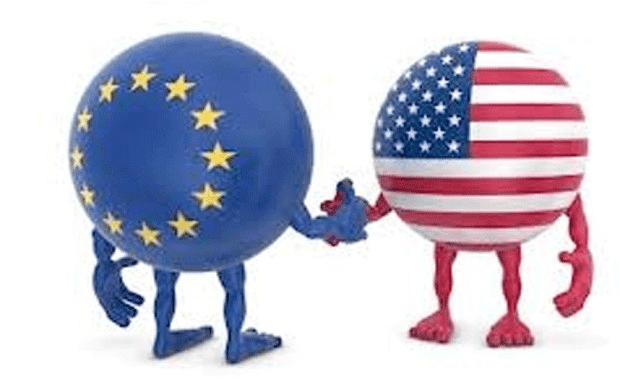
U.S. President Donald Trump is threatening to impose even higher tariffs on goods imported from the European Union (EU), particularly pharmaceuticals. In response, the EU is engaging in new rounds of negotiations to find ways to avert this threat. However, the prospects of reaching a deal remain slim, and the anticipated economic damage to the EU could reach approximately $750 billion – a staggering figure.
Many of the new U.S. tariffs on EU imports are scheduled to take effect on July 9, 2025. However, President Trump has extended this deadline to August 1, 2025, to allow negotiations between Brussels and Washington to continue. Both sides are still working toward reaching an agreement before this new deadline.
Cause
In the spring of 2025, President Trump escalated the trade war by unilaterally announcing the imposition of additional tariffs on goods imported from the EU and several other countries. Following strong reactions from political circles and financial markets, he adjusted the base tariff rate to 10%. This rate now applies to most goods imported into the U.S. from more than 170 countries. In addition, the president has imposed numerous supplementary tariffs, varying by country and product group.
According to estimates by Yale University in early July 2025, the average U.S. tariff rate has risen to 17.6% – the highest since 1934. Before President Trump’s second term, the rate was only 2.4%.
In mid-May, President Trump announced tariffs of up to 145% on imports from China. In retaliation, Beijing imposed tariffs of up to 125% on U.S. goods.
Bilateral Negotiations
So far, the U.S. has reached preliminary agreements on tariffs with Vietnam and the United Kingdom. Under these arrangements, the U.S. imposes a 20% tariff on imports from Vietnam, while Vietnam has agreed to completely eliminate tariffs on U.S. goods. However, according to recent reports, after both negotiating teams had agreed on an 11% tariff for Vietnamese goods, President Trump abruptly raised the rate to 20% without providing any explanation. This unexpected move surprised many analysts, especially since Trump had previously been praised for his „favorable“ stance toward Vietnam.
British businesses benefit from more favorable tariff rates compared to EU countries. For example, motor vehicles from the UK are subject to a 10% tariff, instead of the 25% applied to EU vehicles. Nevertheless, neither Vietnam nor the UK has yet signed formal trade agreements with the U.S. that are legally binding.
Additionally, the U.S. and China have reached a framework agreement to implement terms from the Geneva round, though the White House has not disclosed further details.
Trump’s Argument
Under the slogan “America First,” President Trump has argued that imposing tariffs is necessary to protect the U.S. economy at all costs, with trade protectionism at the forefront. During his campaign, he claimed that the United States had been „taken advantage of“ by its trading partners for decades, leading to a severe trade deficit.
However, the EU has challenged this claim. When the services sector is included, the EU’s trade surplus with the U.S. amounts to only about €48 billion—roughly 3% of total bilateral trade volume—an amount too small to be considered a serious imbalance.
President Trump’s stated goals are to protect domestic manufacturing and create more jobs. He also argues that tariffs will help generate revenue to reduce the federal budget deficit and fund proposed spending packages. Yet, the policy has had negative effects on the U.S. economy: many businesses report declining sales, and consumers are increasingly concerned about inflation and rising commodity prices.
As of July 2025, the Trump administration has shown no signs of backing down from the trade war.
EU Response
In retaliation for the U.S. tariffs, the EU approved a plan to impose duties ranging from 10% to 25% on select U.S. imports, including jeans, motorcycles, almonds, and rice. Additionally, the EU has prepared a list of further tariffs targeting products such as steel, aluminum, textiles, leather goods, beef, and soybeans. However, this plan has been temporarily suspended to facilitate ongoing negotiations with Washington.
The EU’s long-term objective is to negotiate the complete elimination of tariffs. Nevertheless, the likelihood of achieving this goal remains slim. As of early July 2025, experts estimate only a 50% chance of reaching an agreement – largely due to the unpredictable and shifting stance of the U.S. administration, which complicates the EU’s ability to maintain a consistent negotiation agenda.
To increase pressure on Washington, the EU is also considering stricter measures – such as tightening regulations on major U.S. tech firms like Apple, Google, and Meta. These companies currently pay minimal taxes in Europe and are widely accused of exploiting legal loopholes to avoid fulfilling financial obligations.
However, to implement these measures, the EU must establish a firm legal basis, potentially through competition laws and data protection regulations. Most critically, it must also achieve political consensus among its member states – a recurring challenge for the Union.
Impact on the EU
Exports to the U.S. have been declining noticeably. In May 2025, German businesses exported only €12.1 billion worth of goods to the U.S. – a 7.7% decrease from the previous month, and the lowest level in three years. If this trend continues, key German exports such as automobiles, machinery, chemicals, and pharmaceuticals will face serious setbacks.
Since April 2025, the 25% tariff on motor vehicles imported into the U.S. has become a significant burden on the German automotive industry, which is heavily reliant on the American market. The industry is now facing revenue losses amounting to billions of dollars per month, and tens of thousands of jobs across related sectors are at risk.
Estimates from April 2025 suggest that U.S. tariffs could cost Germany up to €200 billion, and the EU as a whole approximately €750 billion over the next four years.
In addition, since June 2025, the U.S. has doubled its tariffs on steel and aluminum- from 25% to 50%. While the direct impact is limited (only about 3% of German steel output is exported to the U.S.), the indirect effects are concerning. Exporters from China, India, and other countries – unable to access the U.S. market – are increasingly shifting their focus to Europe, intensifying competition within the bloc.
In short, the transatlantic trade war is exerting growing and multifaceted pressure on the European economy – comparable in scale to the earlier U.S.-China trade confrontation.
Impact on the United States
Ironically, it is the American public and businesses who are bearing the brunt of the tariffs imposed by their own government. U.S. companies have been forced to raise prices for consumers due to higher import costs, reduce output, and in many cases, lay off workers. Exports have dropped, consumer prices have surged, and fears of an economic recession are mounting.
The indirect effects may be even more damaging: investor confidence is eroding amid a volatile policy landscape. With frequent, unpredictable changes, businesses find it increasingly difficult to craft long-term strategies, leading to diminished trust in the U.S. economy and legal system. The pressing question now is: Who would invest in an economy where rules can change overnight and agreements lack permanence?
Despite mounting concerns, President Trump maintains that the tariffs will ultimately encourage automakers to relocate their production lines to the U.S., generating substantial revenue and restoring the domestic auto industry to its former strength.
In reality, only a small number of foreign companies are considering shifting production to the U.S., while most are looking toward more stable markets. Ironically, it is economically vulnerable regions in the U.S. – many of which are Trump’s political strongholds – that risk suffering the most.
German investment in the U.S. has also declined sharply. According to data from the German Central Bank (Bundesbank), investment from German firms amounted to just €260 million in February and March 2025 – a drop of over 30 times compared to the same period last year, and the lowest level since 1993.
Outlook
The trade war between the United States and the EU has entered an unprecedented phase of tension, with no clear end in sight. The recent U.S.- Vietnam agreement provides a cautionary tale for the EU and other negotiating partners. Despite reaching a deal through formal negotiation channels, President Trump later unilaterally revised the terms – prompting the Vietnamese government to respond with “surprise, disappointment, and anger,” though it refrained from an official protest. The matter remains unresolved.
This situation casts serious doubt on the credibility and reliability of the United States as a negotiating partner. With no clarity on timing or outcomes, trust in the negotiation process is eroding rapidly. Though both the U.S. and the EU are experiencing significant losses, there is still no indication of a breakthrough.
Systemic risks to global supply chains, free trade, and the international economic order are growing more acute. The circumstances call for rapid, decisive, and collaborative policy action from both sides to avert a widespread trade crisis. Instead, President Trump’s tariff strategy appears to be fueling disorder in global commerce -damaging America’s reputation as a dependable economic partner and undermining the very global order it once helped build.
In the end, both the United States and its partners stand to lose.
Update:
Trump announces 30 percent tariff on EU imports
Trump wrote in a letter he published on his social media platform Truth Social that he wants to impose tariffs of 30 percent on goods from the EU and Mexico from August 1.
Trump said: “The US trade deficit with the EU is a threat to national security. We have discussed our trade relationship with the European Union for years and have come to the conclusion that we need to move away from these long-term, large and persistent trade deficits created by its tariff and non-tariff measures and trade barriers. Unfortunately, our relationship was far from being mutual. The European Union will provide the United States with unrestricted, duty-free market access without imposing tariffs on us to try to reduce the large trade deficit.“ What exactly the US president means by this remained unclear at first.
EU Commission President Ursula von der Leyen reacted immediately. She warned the US government that 30 percent tariffs on EU exports would severely disrupt transatlantic supply chains. The EU has always sought a negotiated solution with the US. They are prepared to continue working on an agreement until August 1. If this fails, the EU will take all necessary steps to protect its interests, including countermeasures.
 KIM THEM DO