Kim Them Do
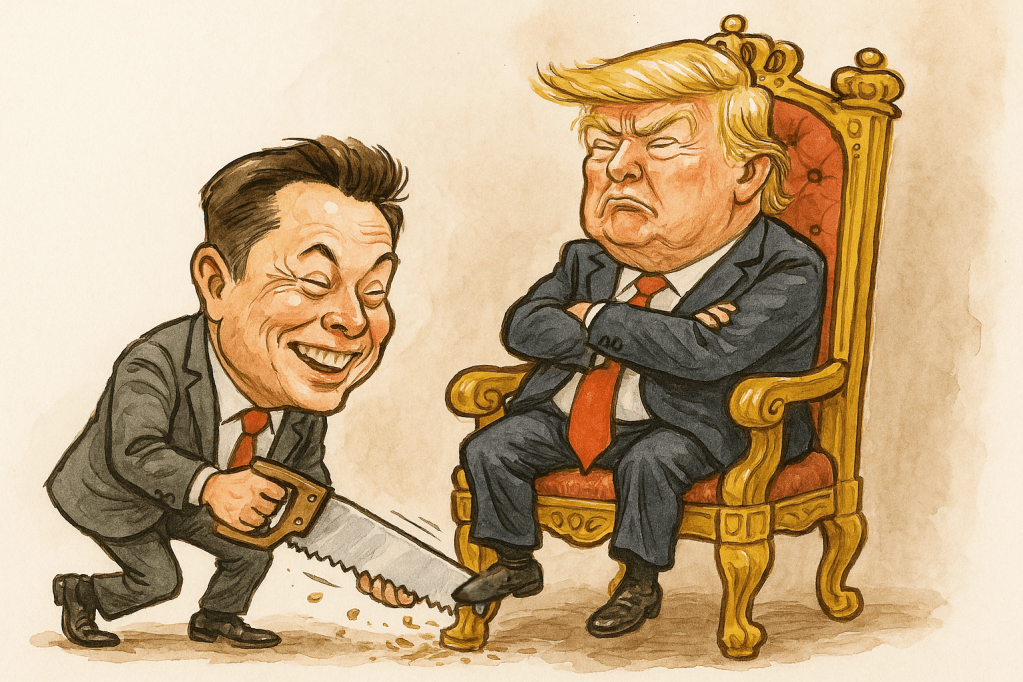
Tech billionaire Elon Musk has announced the formation of a new political organization called the “America Party,” aiming to compete with the Republican Party led by President Donald Trump. However, the chances of this initiative succeeding remain slim.
Independence Day Appeal
On July 4 – U.S. Independence Day- Musk asked users on X (formerly Twitter) whether they wanted a new political party. According to the poll, 65% of participants supported the idea. While the poll wasn’t limited to American citizens, Musk took it as a sign of support and quickly declared the launch of the “America Party.”
Goals of the America Party
In his posts on X, Musk said the party’s mission is to “return freedom” to the American people. He claimed the U.S. is “bankrupt” due to government waste, corruption, and a political system dominated by a “single party” that, in his view, no longer represents real democracy.
Musk called for a more libertarian approach to governance, advocating for a smaller government – especially in defense – major tax cuts, and the removal of certain legal and financial protections for marginalized groups and the environment. These proposals are controversial and unlikely to gain broad support.
He cited the influence of philosopher Ayn Rand and tech investor Peter Thiel, who promote values like personal achievement, responsibility, and innovation over traditional political interests. Despite these influences, such ideas currently have limited appeal among the broader U.S. electorate.
Clashing with Trump
Although Musk cannot run for president due to his South African birth, he has directly challenged the Trump-led Republican Party. He has threatened to support opposition candidates in future elections to unseat lawmakers backing Trump’s tax and spending policies.
Trump has responded strongly, warning that he may cut federal subsidies to Musk’s companies – including Tesla – if Musk continues to oppose him.
Can the America Party Succeed?
The U.S. political system has long been dominated by two major parties – Democrats and Republicans. While 2024 Gallup polls show over 60% of Americans support the idea of a strong third party, smaller parties like the Greens, Libertarians, and Constitution Party remain marginal, with limited presence in most states.
The “winner-take-all” system of awarding electoral votes makes it very difficult for third-party candidates to succeed at the federal level. Simply coming in second does not earn them any representation. In addition, strict rules for getting on the ballot, minimum support thresholds, and reliance on private fundraising all pose significant barriers.
Musk’s Potential Influence
With an estimated net worth of $360 billion, Musk has the financial means to build a new political party. He could influence election outcomes – especially in closely contested districts – if the party gains modest traction.
However, launching a viable political movement requires more than money. Musk would need to build support across multiple states, establish a solid party infrastructure, and recruit strong candidates. His political platform also remains vague. While he emphasizes reducing the federal deficit, this message may not resonate with voters without more concrete proposals.
Public opinion may also be a hurdle. As of June 2025, 58% of respondents in a national survey viewed Musk unfavorably, while only 35% had a positive opinion of him.
Trump’s Reaction
President Trump has dismissed Musk’s initiative as “ridiculous” and “a distraction.” He argued that the two-party system is essential for political stability and claimed that a third party would only create confusion.
Musk was once a strong Trump supporter, donating over $250 million to his campaign and advising on government spending. But by mid-2025, their relationship had deteriorated. Musk publicly criticized Trump’s “Big Beautiful Bill”—a major tax and spending package—as fiscally irresponsible and harmful to tech companies like Tesla and SpaceX.
 KIM THEM DO